Friday, 24 October 2014

Top Ways To Use Decorative Grilles Around the Home


If we look back at their traditional use, decorative grilles had a very practical purpose.  Historically these perforated metal sheets, which featured a variety of designs, were used to prevent animals and people getting into a property whilst at the same time providing much needed ventilation for rooms.

These days we see decorative metal grilles serving a much more aesthetic purpose so how can they be put to good effect around your home?

Radiator Grilles

Probably the most popular use of decorative grilles in the home is to cover up unsightly radiators and other heaters.  If they are made to measure, radiator grilles will fit perfectly so that they cover up the radiator but still allow for the heat to circulate the room.  Most grille manufacturers will offer you a wide choice of designs, which are created by punching or perforating the metal sheet.  You can also choose from different finishes such as stainless steel or brass – whatever will best complement your interior design themes.

decorative radiator grilles pattern options


Why should you use a radiator grille?  The principal benefit is that you can cover up the radiator but using these grills also allows you to be more original in your interior design.

Floor Grilles

Ventilation areas in the floor can be unsightly, not to mention providing an open doorway for bugs and small animals.  Decorative floor grilles can be used to keep the room looking neat and tidy as well as keeping debris and small creatures out of your home.  They are often supplied with a border to give a tidier finish.

decorative grilles pattern options


Exterior Grilles

The exterior of some houses may feature decorative grilles.  If you need to replace one of these it is worth remembering that you’ll need to choose a durable, weatherproof material such as copper, aluminium or stainless steel.

Which designs to choose?

The style of grille you choose will depend upon your interior design themes and the age of your home.  For instance, you may have come across radiator grilles featuring regency diamond patterns in stately homes or castles as this design gives a very prestigious appearance.  A more modern lattice pattern finished in silver or stainless steel may be more suitable for contemporary interiors, but at the end of the day the choice is yours.

Whatever you need decorative grilles remember they’re made to size so don’t forget to take accurate measurements before placing your order!  Find out more by visiting www.radiator-grilles.co.uk.

Thursday, 16 October 2014

Why Should You Fit Radiator Grilles In Your Home?

Let’s face it, radiators aren’t the prettiest of household appliances.  Although most of us wouldn’t be without a central heating system, there’s no getting away from the fact that radiators are a bit of a nuisance in terms of the aesthetics of a room.  Ideally they shouldn’t be placed underneath a window due to heat loss, which means you are only left with 3 walls within the room in which to place your radiator.  Quite often you are very limited to where you can position the radiator due to the practicalities of the heating system, which means that at times you are left with an ugly radiator sitting prominently within a room.

Position of the Radiator

However, there is one way around this problem.  If you’re not able to change the position of the radiator, a suitable alternative could be to fit radiator grilles around the existing radiator.  Commonly made from wood or MDF, radiator grilles can be made to fit any size or shape of radiator.  They can even be designed to incorporate a decorative mesh at the front of the radiator cover, this not only lets heat from the radiator circulate into the room, but also helps to provide an attractive feature.


Period Homes

Radiator grilles are ideal for use in period homes, as ordinary radiators can make a historic home lose its appeal by taking away some of its character.  Some homeowners really try hard to recreate the traditional feel of the home by restoring the original features, but a radiator can spoil the effect.  Radiator covers can be designed to suit almost any home, whether the homeowner is looking for a design which was popular in a particular period, or if perhaps they want to have a modern and clean looking cover.

Decorative Mesh

Choosing the style of decorative mesh which is placed at the front of the radiator grille means that the grille will complement the style of the room.  Homeowners can choose from a wide range of mesh designs, from plain criss-cross designs to more ornate patterns, according to their personal tastes.

Radiator grilles which feature an attractive decorative mesh can certainly help to disguise an ugly radiator in a room.  Many will also feature a top shelf which can be used to display ornaments or photographs, enabling the radiator to become part of an attractive feature within the room.  To find out more about installing radiator grilles in your home, please visit the Fine Mesh Metals website. 


Friday, 26 September 2014

Gabion Baskets for Landscaping and Free-Form Wall Solutions

Gabion baskets are baskets made from welded steel mesh or woven wire and are filled with rocks that are large enough to stay within the mesh. Due to the way that they are constructed, gabions can be extremely flexible both in size and aesthetics, depending on their intended use. Commonly used for the purpose of stabilising earth movement and erosion, as well as for river control, canals and reservoirs, gabion baskets are also increasingly popular for use in garden landscaping and free-form wall solutions.

Increasing numbers of architects for new homes and renovations as well as landscape contractors and homeowners alike are realising the many practical and aesthetic benefits of gabion baskets. As gabions are made from a steel mesh or woven wire, before they are filled, they are light and therefore easy to move and manipulate, helping to make landscaping work much quicker and easier. Welded mesh gabions in particular are fast to erect as they do not require tensioning before they are filled.

Welded mesh gabions can be relied upon to keep their shape rather than being affected by bulges and depressions. This allows them to easily fit against a dug out wall when landscaping a garden. This is not to say that gabion baskets are not customisable; as it is likely that most landscaping plans will not consist only of straight lines, gabions can be used to fabricate curves for home garden use and bigger projects. Curved edges help to give a much more natural, yet contemporary look to landscaping.

Gabions can be filled with any type of rock, providing they are large enough to stay inside the wire casement. This means that the aesthetics of a gabion basket are extremely flexible, allowing you to customise how your gabion landscaping wall will look by adding different varieties of rock, as well as different coloured and varied textures of stone. Regardless of the modern look that gabions can give a garden, by using them to create and separate different levels of ground, you can be sure that all ground will remain steady and safe.


In additional to being used as a retaining wall for landscaping, gabion baskets are equally as useful for creating free-form wall solutions, as an appealing alternative to standard bricks. By simply securing some concrete, or even wood panels to the top of a gabion basket wall, you can even create a striking, yet sturdy and functional garden bench.

Whilst you may like the idea of the sharp, contemporary appearance of gabion landscaping or walls in your garden, you could also consider softening their form by planting on top of the baskets. Gabions are also ideal for climbing plants should you wish to disguise the rocks underneath.


Amongst the biggest benefits of installing gabion baskets istheir longevity. Standard gabions, with a zinc/aluminium finish over welded mesh is ideal for almost all landscaping and free-form wall solutions, other than if they are near polluted water or coastal breezes, lasting up to 60 years without needing to be replaced. However, for more hostile environments, a PVC coating can add a further protective layer.


Monday, 22 September 2014

Puppy Cages and Dog Runs

For centuries, dogs have been thought of as man’s best friend and people all over the world keep dogs as house pets. However, as much as we love our dogs, there are times when we must leave them at home. For puppies especially, the thought of leaving them alone in your house can be quite worrying, as you fear that your puppy will cause damage to your furniture and belongings, but more importantly, that they may put themselves in danger. For this reason, many people choose to crate train their young dog.

Whilst you may feel that keeping your puppy confined in a puppy cage whilst you are out of the house is cruel, a cage is actually a safe and comforting place for your dog. Naturally, dogs live in dens to protect themselves from danger as well as to keep warm and dry. A puppy cage acts as a den, and is a safe haven for them to go and relax.

Puppy cages are commonly constructed from sturdy galvanised steel, with handles for carrying and a removable bottom tray, making the cage easy to transport and clean.


Protecting your furniture and possessions

It is a commonly known fact that many young dogs chew things; anything from chair legs, to toys or shoes, not to mention their own bedding, your bedding, or just about anything else that they can get hold of. Whilst providing your dog with their own chew toys to distract them may help to a certain extent, it is unlikely that this will prevent the majority of puppies from chewing entirely, so you could be looking at paying for a few damages.

By crate training your dog, you can leave them in a puppy cage when you are not there, protecting your furniture and possessions from being chewed and shredded to pieces.

Puppy safety

It is not only the safety of your possessions that can be put into jeopardy by your puppy’s chewing habits, but also their own safety. Puppies are often drawn to chew dangerous objects such as electrical wires and they can also swallow parts of what they are chewing. By crate training them and leaving them in their cage for short periods whilst you are out, you can avoid your puppy endangering themselves.

Toilet training

Puppy cages can also play a huge part in helping your Dog with toilet training. All puppies will avoid going to the toilet in their bed, so within reason they will wait to be released before going to the toilet, making house training much easier. You should get your puppy into a routine of being taken outside once they are released from their cage.

Remember

Whilst puppy cages make excellent short term solutions for keeping your dog safe, clean and happy, it is important that you do not keep them confined for too long – a puppy cage can’t be used as a substitute for a kennel.

Dog runs

If you are going to be out for some hours, you can consider installing a dog run in your garden. Dog runs are constructed from galvanised wire panels that can be fit together and bolted to make custom shapes. Dog run panels are designed to be just as ideal for large dogs as for smaller dogs and are made with a small aperture to prevent dogs from climbing.


A dog run gives your animal space to move around and benefit from fresh air, whilst being kept safe. Understandably, the bigger your dog, it makes sense for you to build a bigger dog run, adding more dog run panels to give them the space to run up and down and behave naturally.

If you have more than one dog, you can easily build a divided kennel to keep them separated. If you choose, you could add a fully solid dividing panel to prevent your dogs from barking at each other. These solid panels are also useful as wind breaks and sun shades to protect your dogs from the weather conditions if they are to be in their run for a longer period of time.


Friday, 29 August 2014

The benefits of radiator grilles

Just about every homeowner will be familiar with this problem: you’re redecorating and you want every aspect of your room to look good. You’ve chosen some wonderful pieces of furniture that blend style and functionality, you’ve carefully selected certain themes and colours that reflect your own personal tastes, and you’ve customised everything right down to the light fittings and switches. But you’re left with one immovable problem; the radiator.

You may have selected just the right chairs to complement the polished wooden floor, or found a wonderful antique dresser to match the table – but one thing that almost never matches and never looks just right is the radiator. Difficult to paint and impractical to move, radiators put a spanner in the works of many home improvement projects!

The first step in solving this problem is to install a radiator cover. These are a big help – they enable your radiator to be treated more like an item of furniture. But you still need a way of applying your own personal style and taste, and of coordinating the cover with the rest of the room.


The solution is radiator grilles. Decorative radiator grilles can be fitted to radiator covers to add almost unlimited patterns, styles and colours to meet your needs. Perforated sheets for radiator grilles ensure that the radiator still functions efficiently and warm air can circulate – but they also offer an almost unlimited number of options when it comes to matching or complementing the look of the room.

Plain radiator covers can leave you with an unsightly box in your room – hardly much better than simply leaving the radiator uncovered. But decorative radiator grilles can provide a beautiful, stylish addition to your home.

Radiator grilles can be used in any room where you have a radiator, and they can be produced to any size you may require. You may decide to use the same grille pattern throughout your home for a consistent look. Or perhaps you’d like to choose a different design for each room, opting for a unique style in every part of the house. With so many wonderful patterns and themes available – and with installation so easy and straightforward – the most difficult part will be deciding which style to go for.

There’s really no need to put up with ugly radiators spoiling the look of your home, when you can install stylish, decorative radiator grilles to achieve the perfect result.


To find out more about radiator grilles, feel free to visit the Weld Mesh website.

Friday, 22 August 2014

How to build a DIY pet run

Dog runs can be a great solution for many owners and their pets. Some owners prefer not to have their dogs sleeping in the house, and many dogs also prefer to be outdoors and have their own defined territory. Although this can be partly accomplished by a kennel in the yard, the dog is still having to share the yard or garden with its human family, and some animals may cause damage and possible annoyance to the neighbours. A spacious and safe dog run is the obvious solution for owners and pets (and neighbours!) alike. The idea of obtaining a dog run may seem pricy, however, it's surprisingly easy to build these yourself as long as you have the right materials. Follow these tips and your beloved dog will have a new home in no time.

Look at the location. First and foremost you need to think about size and shape, which will be determined by two things; the size of your yard and the size of your dog. In terms of animal size, the recommended minimum in terms of the space needed to meet your pet's needs is 3' by 10'. Larger dogs will prefer significantly more. 


Now you need your building materials. You may decide to use concrete for the floor, but this isn't always necessary, particularly if you have a paved yard. Fencing is of course key, and by far the easiest and often most affordable alternative is to use welded mesh panels. As well as making your dog run simple to build they provide ventilation and the material is both safe and long lasting. As they tend to be easy for fitting and come in a range of sizes, perfect for a modular design, you can get as creative as you wish with the size and shape of your run.

Decide if you need a roof. If your pet is going to be spending a lot of time in the run, they will need some shelter from the elements. If your design already incorporates a covered area or is simply built around an existing roofed kennel then this may not be necessary.

Pet runs are increasing in popularity and are not just limited to dogs. Cat runs are also increasingly being used by owners who are worried about their cat running off or wandering too far afield. Simply follow the guidelines as for a small dog run.


To find out more about the materials required for building a DIY pet run, please take a look at the Weld Mesh website. 

Friday, 25 July 2014

Let Your Birds Take Flight With An Aviary Of Their Own

No animal is happy or thrives in a small enclosed space, and that includes birds. Many bird enthusiasts start out with small cages, but many progress to building their own aviaries so their creatures have a more natural habitat, and even space to fly.

You might think you need a lot of room for an aviary, but these large cages usually only require a small surface area because generally they are tall rather than wide. Inside, perches and other features can be installed, and various types of foliage can be placed in the enclosure to simulate a natural environment that your birds will love.

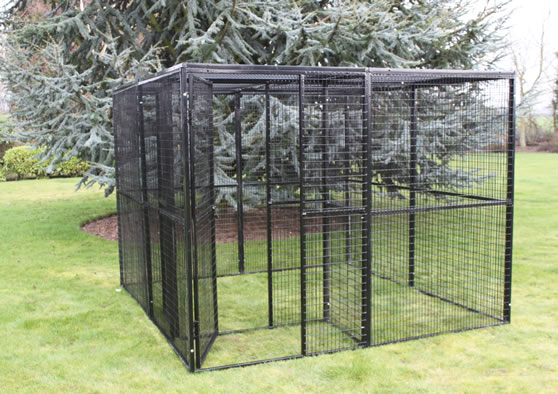
It’s not difficult to make your own aviary either. Staring out with a good design that provides ample space for your birds and sourcing construction materials such as welded mesh  aviary panels from Weld Mesh, bird aviaries can be made with ease and in no time, freeing up your avian charges from the flightless drudgery of tiny, cramped spaces.

When considering an aviary for your home, you must first decide where it’s going to be. Will it be inside or outside the house, and where is the best location for it? For outdoor, you'll need to take weather factors into account – such as not placing the aviary in an unshaded place that may get strong sunlight, or lots of rain – and if indoors, ventilation will be a main factor in the decision. You won't want this larger cage, possibly with more birds in it, stinking up the house, and they in turn will require a source of fresh air.

When you decide where the aviary will go, it’s simply a matter of designing a basic frame structure and building it with the relevant materials. Welded mesh aviary panels are simple to construct and join together to create the ideal aviary.

The popularity of aviaries stretches back centuries, possibly to as far as the early 1800s, due to the greater freedom it gives its inhabitants as well as providing people greater access in viewing birds in a habitat that’s as close to nature as possible.

With a new and much larger structure, bird fanciers can expand their hobby by introducing new species into the cage and perhaps engaging in breeding. The birds will benefit from reduced stress and be far healthier and happier.

aviary

For more information on aviary panels and advice on specifications and aviary size, you can visit the Weld Mesh website.