No
animal is happy or thrives in a small enclosed space, and that includes birds.
Many bird enthusiasts start out with small cages, but many progress to building
their own aviaries so their creatures have a more natural habitat, and even
space to fly.
You might think you need a lot of room for an aviary, but these large cages usually only require a small surface area because generally they are tall rather than wide. Inside, perches and other features can be installed, and various types of foliage can be placed in the enclosure to simulate a natural environment that your birds will love.
It’s not difficult to make your own aviary either. Staring out with a good design that provides ample space for your birds and sourcing construction materials such as welded mesh aviary panels from Weld Mesh, bird aviaries can be made with ease and in no time, freeing up your avian charges from the flightless drudgery of tiny, cramped spaces.
When considering an aviary for your home, you must first decide where it’s going to be. Will it be inside or outside the house, and where is the best location for it? For outdoor, you'll need to take weather factors into account – such as not placing the aviary in an unshaded place that may get strong sunlight, or lots of rain – and if indoors, ventilation will be a main factor in the decision. You won't want this larger cage, possibly with more birds in it, stinking up the house, and they in turn will require a source of fresh air.
When you decide where the aviary will go, it’s simply a matter of designing a basic frame structure and building it with the relevant materials. Welded mesh aviary panels are simple to construct and join together to create the ideal aviary.
The popularity of aviaries stretches back centuries, possibly to as far as the early 1800s, due to the greater freedom it gives its inhabitants as well as providing people greater access in viewing birds in a habitat that’s as close to nature as possible.
With a new and much larger structure, bird fanciers can expand their hobby by introducing new species into the cage and perhaps engaging in breeding. The birds will benefit from reduced stress and be far healthier and happier.
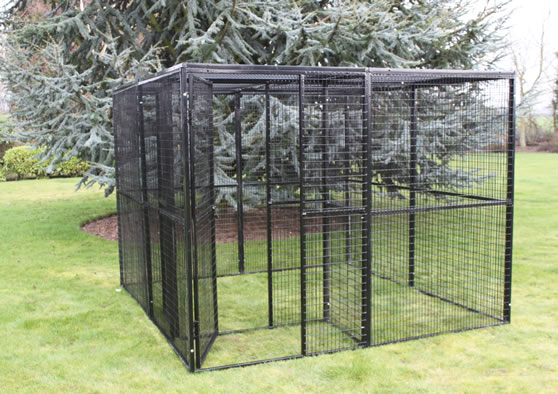
You might think you need a lot of room for an aviary, but these large cages usually only require a small surface area because generally they are tall rather than wide. Inside, perches and other features can be installed, and various types of foliage can be placed in the enclosure to simulate a natural environment that your birds will love.
It’s not difficult to make your own aviary either. Staring out with a good design that provides ample space for your birds and sourcing construction materials such as welded mesh aviary panels from Weld Mesh, bird aviaries can be made with ease and in no time, freeing up your avian charges from the flightless drudgery of tiny, cramped spaces.
When considering an aviary for your home, you must first decide where it’s going to be. Will it be inside or outside the house, and where is the best location for it? For outdoor, you'll need to take weather factors into account – such as not placing the aviary in an unshaded place that may get strong sunlight, or lots of rain – and if indoors, ventilation will be a main factor in the decision. You won't want this larger cage, possibly with more birds in it, stinking up the house, and they in turn will require a source of fresh air.
When you decide where the aviary will go, it’s simply a matter of designing a basic frame structure and building it with the relevant materials. Welded mesh aviary panels are simple to construct and join together to create the ideal aviary.
The popularity of aviaries stretches back centuries, possibly to as far as the early 1800s, due to the greater freedom it gives its inhabitants as well as providing people greater access in viewing birds in a habitat that’s as close to nature as possible.
With a new and much larger structure, bird fanciers can expand their hobby by introducing new species into the cage and perhaps engaging in breeding. The birds will benefit from reduced stress and be far healthier and happier.
For
more information on aviary panels and advice on specifications and aviary size,
you can visit the Weld Mesh website.